We have compiled a list of manufacturers, distributors, product information, reference prices, and rankings for Training education video.
ipros is IPROS GMS IPROS One of the largest technical database sites in Japan that collects information on.

Training education video - List of Manufacturers, Suppliers, Companies and Products | IPROS GMS

Training education video Product List

1~9 item / All 9 items

Displayed results

The story of how converting a manual for food and beverage training into a video reduced training time by half.

Convert the current paper manual into video! Learn cooking techniques through short videos.

In the food service industry, the transmission of skills to new staff is a challenge in cooking instruction. Relying solely on verbal explanations or paper manuals can lead to a lengthy understanding of cooking procedures and disparities in skill acquisition. Particularly, cooking techniques rely heavily on visual information, which can be difficult to convey through words alone. Our video manuals support the early development of new staff by clearly explaining cooking procedures through a combination of animation and live-action footage. 【Usage Scenarios】 - Standardization of cooking procedures - Training of new staff - Improvement of cooking techniques 【Effects of Implementation】 - Reduction in cooking time - Improvement in cooking quality - Decrease in training costs

  • Distance learning/E-learning
  • Distance learning/E-learning
  • Training education video

Added to bookmarks

Bookmarks list

Bookmark has been removed

Bookmarks list

You can't add any more bookmarks

By registering as a member, you can increase the number of bookmarks you can save and organize them with labels.

Free membership registration

The true nature of the labor shortage in transportation: Is it the 800 hours a year taken away by education?

Reducing the burden on field leaders through the digitalization of education. Estimating ROI!

In the transportation industry, high-quality education is essential for safe operations and efficient business execution. In particular, when utilizing new technologies such as VR training, standardization and efficiency of educational content are required. When experienced field leaders dedicate time to training newcomers, it can potentially disrupt their primary duties. By digitizing education, it is possible to reduce the burden on field leaders and improve operational efficiency. 【Use Cases】 - Learning work procedures through VR training - Educating foreign staff through multilingual support - Ensuring adherence to safety rules 【Effects of Implementation】 - Reduction in training time - Decrease in training costs - Improvement in safety awareness

  • Distance learning/E-learning
  • Distance learning/E-learning
  • Training education video

Added to bookmarks

Bookmarks list

Bookmark has been removed

Bookmarks list

You can't add any more bookmarks

By registering as a member, you can increase the number of bookmarks you can save and organize them with labels.

Free membership registration

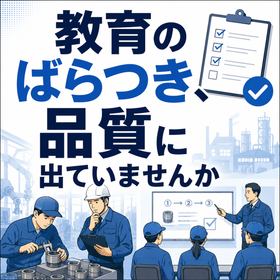
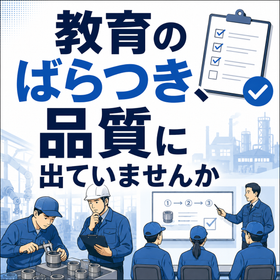
Is the variability in education affecting the quality in the food and beverage industry?

Even with the same procedure manual, if the teaching method differs, the on-site judgment will gradually change.

In the food service industry, thorough hygiene management is essential to protect the safety and health of customers. In particular, the detailed judgments made in daily operations regarding the handling of ingredients, cooking procedures, and cleaning methods are directly linked to the risk of food poisoning and the quality of the dishes served. In OJT-centered education, differences can easily arise in the way instructors explain and the depth of their confirmations, which may lead to variations in hygiene management and insufficient communication to new and foreign staff. These small differences in understanding can also impact compliance with hygiene standards and appropriate responses in case of emergencies. To organize the variations in education and standardize on-site hygiene management training, our video solution is needed. 【Usage Scenarios】 - Hygiene management training for new staff - Hygiene management training for foreign staff - Standardization of cooking procedures and cleaning methods - Thorough dissemination of food poisoning prevention measures - Regular hygiene management training 【Effects of Implementation】 - Improved understanding of hygiene management standards - Reduction of human errors - Alleviation of the burden on educators - Smooth information transmission through multilingual support How should we organize the variations in education and standardize on-site training? Please refer to the materials for more details.

  • Distance learning/E-learning
  • Distance learning/E-learning
  • Training education video

Added to bookmarks

Bookmarks list

Bookmark has been removed

Bookmarks list

You can't add any more bookmarks

By registering as a member, you can increase the number of bookmarks you can save and organize them with labels.

Free membership registration

Promoting Understanding through Animation Production for Education

Deciding on the purpose before the content of the video.

In the education industry, deepening the understanding of learning content is extremely important. Particularly when dealing with complex material or specialized knowledge, it can be difficult to grasp concepts using only traditional texts or still images. Animation videos facilitate understanding for learners by conveying information visually, helping to reinforce memory retention. When considering animation production, it is essential to first clarify "where, to whom, and for what purpose it will be used." By creating videos that align with objectives such as reducing the number of explanations in training or eliminating inconsistencies in how manuals are taught, effective learning can be supported. 【Usage Scenarios】 * Training videos * E-learning materials * Manual videos 【Benefits of Implementation】 * Improved understanding for learners * Reduced education costs * Increased knowledge retention rate

  • Distance learning/E-learning
  • Training education video

Added to bookmarks

Bookmarks list

Bookmark has been removed

Bookmarks list

You can't add any more bookmarks

By registering as a member, you can increase the number of bookmarks you can save and organize them with labels.

Free membership registration

Three Major Wastes Common to Companies Where Training "Doesn't Work" in the IT Industry

I'm too busy just managing education to have time for improvements.

In the IT industry, the speed of technological innovation is rapid, and it is necessary to continuously acquire the latest technologies. Particularly, every time new technologies and tools emerge, a technological gap can arise among employees, potentially leading to project delays and a decline in quality. Improving the quality and efficiency of training is essential to bridge the technological gap and enhance the overall competitiveness of the organization. 【Usage Scenarios】 - Employee training during the introduction of new technologies - Training for improving technical skills - Standardizing technical capabilities within teams 【Effects of Implementation】 - Elimination of technological gaps - Increased project efficiency - Improvement in quality

  • Distance learning/E-learning
  • Distance learning/E-learning
  • Educational Institutions
  • Training education video

Added to bookmarks

Bookmarks list

Bookmark has been removed

Bookmarks list

You can't add any more bookmarks

By registering as a member, you can increase the number of bookmarks you can save and organize them with labels.

Free membership registration

Improving Service Quality Using Videos for Hotels

Would you like to improve the quality of hotel services through video training?

In the hotel industry, providing high-quality service is essential for improving customer satisfaction. In particular, customer service skills, cleaning techniques, and multilingual capabilities significantly impact customer satisfaction. Insufficient employee training can lead to a decline in service quality, resulting in complaints from customers and a decrease in repeat visitors. Video training is an effective means to address these challenges and enhance service quality. 【Utilization Scenes】 - Improvement of customer service skills - Standardization of cleaning techniques - Strengthening of multilingual capabilities - Early empowerment of new staff 【Effects of Implementation】 - Increased customer satisfaction through consistent service delivery - Reduction in training costs - Skill enhancement for employees - Decrease in the number of complaints

  • Distance learning/E-learning
  • Distance learning/E-learning
  • Training education video

Added to bookmarks

Bookmarks list

Bookmark has been removed

Bookmarks list

You can't add any more bookmarks

By registering as a member, you can increase the number of bookmarks you can save and organize them with labels.

Free membership registration

The true nature of the labor shortage in the food and beverage industry: Is it the 800 hours a year taken away by training?

Visualize the education costs of restaurants! Calculate ROI in one minute.

The food service industry is facing a serious labor shortage, and training new staff and multilingual staff has become a significant burden. In particular, with the introduction of AI customer service, there is a need to acquire new skills such as operation methods and customer interaction, which tends to increase training costs. The time that experienced staff spend on training can interfere with their primary duties, potentially reducing the efficiency of store operations. Our training cost and ROI simulation sheet allows you to estimate the costs associated with training and the reduction effects from digitalization simply by inputting the hourly wage and number of staff at the restaurant. 【Usage Scenarios】 - Introduction of AI customer service systems - Training of new staff - Training of multilingual staff - Creation of customer service manuals 【Effects of Implementation】 - Reduction of training time - Reduction of labor costs - Improvement of operational efficiency - Increase in customer satisfaction

  • Distance learning/E-learning
  • Distance learning/E-learning
  • Training education video

Added to bookmarks

Bookmarks list

Bookmark has been removed

Bookmarks list

You can't add any more bookmarks

By registering as a member, you can increase the number of bookmarks you can save and organize them with labels.

Free membership registration

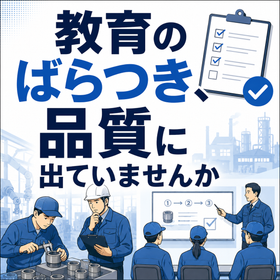
Is the variability in education for agriculture not reflected in quality?

The latest technology can change the level of understanding in the field depending on how it is taught.

In the agricultural sector, the introduction of the latest technologies and the acquisition of new farming methods are essential for improving productivity and maintaining quality. However, in an OJT-centered education system, differences in the way instructors explain concepts and emphasize points can lead to variations in understanding among workers. This inconsistency in understanding can hinder the adoption of new technologies and affect the quality of work. Organizing the variations in education and standardizing on-site training will lead to effective utilization of technology and stable quality. 【Application Scenarios】 - Learning how to operate new agricultural machinery - Conveying the latest cultivation techniques - Standardizing pesticide application and harvesting tasks - Providing work instructions to foreign workers 【Effects of Implementation】 - Improvement in quality due to uniformity in work understanding - Increased efficiency in training new and foreign workers - Reduction in the time required to acquire skills - Decrease in work errors How should we organize the variations in education and standardize on-site training? Please refer to the materials for more details.

  • Distance learning/E-learning
  • Distance learning/E-learning
  • Training education video

Added to bookmarks

Bookmarks list

Bookmark has been removed

Bookmarks list

You can't add any more bookmarks

By registering as a member, you can increase the number of bookmarks you can save and organize them with labels.

Free membership registration

Is the variability in education affecting the quality for IT and software?

Even with the same procedure manual, if the teaching method differs, the on-site judgment will gradually change as well.

In the IT and software industry, the standardization of development processes and operational procedures is emphasized as crucial for project success and quality maintenance. Particularly when introducing new technologies or when there is variability in team members' skill levels, consistent knowledge sharing and understanding are required. In OJT-centered education, differences in the nuances of explanations by different instructors can lead to disparities in understanding of tasks, which may ultimately affect code quality and development efficiency. To organize the variability in education and standardize on-site skills, clear and repeatable educational methods are necessary. 【Usage Scenarios】 - Unifying team skills during the introduction of new technologies - Promoting development standards and coding conventions - Education in a remote work environment - Sharing technical know-how that tends to become personalized 【Effects of Implementation】 - Standardization of skill levels across the development team - Improvement in code quality and reduction in bug occurrence rates - Accelerated effectiveness of new engineers - Reduction in time and costs associated with education How should we organize the variability in education and standardize on-site training? Please refer to the materials for more details.

  • Distance learning/E-learning
  • Distance learning/E-learning
  • Training education video

Added to bookmarks

Bookmarks list

Bookmark has been removed

Bookmarks list

You can't add any more bookmarks

By registering as a member, you can increase the number of bookmarks you can save and organize them with labels.

Free membership registration